Smart Ways to Save Money on Auto Care Projects
The modern vehicle is an engineering marvel, but with advanced technology comes a steep increase in the cost of ownership. Beyond monthly payments, insurance premiums, and fuel, the most unpredictable budget disruptor is maintenance and repair. For many drivers, the sheer anxiety of an illuminated check engine light leads to one of two costly behaviors: rushing to the nearest dealership and overpaying out of convenience, or ignoring the problem entirely until a minor hiccup balloons into a catastrophic failure.
Saving money on vehicle upkeep does not mean compromising on safety, cutting essential corners, or resorting to shoddy workmanship. True savings are found through proactive planning, strategic sourcing, and understanding the mechanics of the automotive industry itself. When you learn how to navigate the ecosystem of parts suppliers, labor rates, and preventative schedules, you transition from a passive consumer to an empowered owner.
This comprehensive guide breaks down the most effective strategies to drastically reduce your lifetime automotive expenses. From mastering the fundamentals in your own driveway and sourcing replacement components like a professional, to handling cosmetic enhancements and emergency breakdowns without being exploited, these actionable insights will keep your vehicle—and your wallet—in peak condition.
Master the Art of Preventative and Basic Maintenance
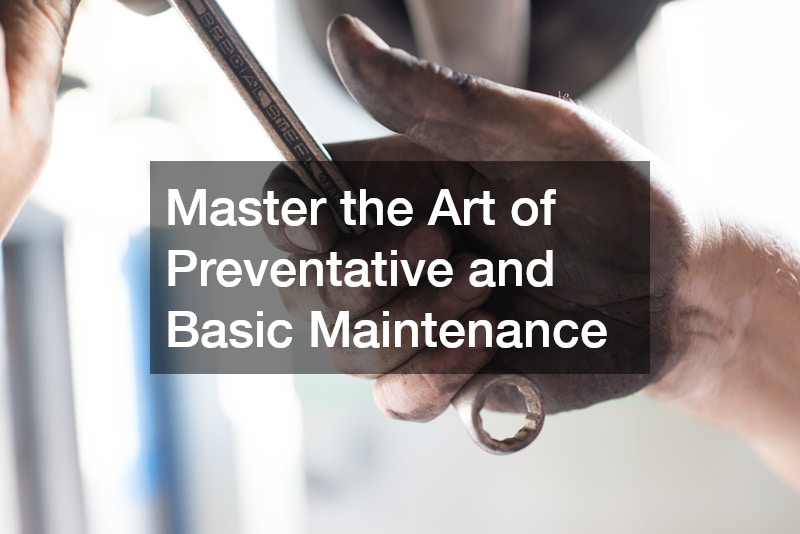
The most expensive repair is the one that could have been avoided. By taking ownership of your vehicle’s baseline health, you not only extend its lifespan but also eliminate the high labor markups associated with simple, routine tasks.
Learn to Perform Routine Fluid Checks and Changes Yourself
Fluids are the lifeblood of your vehicle. While modern cars have complex electronics, checking and replacing vital fluids remains incredibly straightforward. Dealerships and quick-lube chains often charge premium prices for what amounts to $30 in materials and twenty minutes of work.
-
Engine Oil and Filter: The easiest gateway into DIY maintenance. By purchasing full synthetic oil and a high-quality filter from a big-box retailer, you can perform an oil change for a fraction of a shop’s price. All you need is a set of ramps, a socket wrench, and an oil catch pan. Over the lifetime of a vehicle, doing this yourself can save thousands of dollars.
-
Engine Coolant: Coolant breaks down over time, becoming acidic and eating away at your radiator and water pump. Checking the reservoir level weekly and performing a simple drain-and-fill every 50,000 miles prevents severe engine overheating.
-
Brake Fluid: Brake fluid is hygroscopic, meaning it absorbs moisture from the air. This lowers its boiling point and causes internal rusting. A simple $10 fluid tester pen can tell you exactly when the moisture content is too high, preventing you from paying for a flush before it is truly necessary.
Follow the Manufacturer’s Scheduled Maintenance Timeline Strictly
Your glovebox holds the ultimate financial defense manual: the owner’s manual. Dealership service advisors frequently recommend aggressive maintenance schedules designed to maximize their profit rather than prolong your car’s life.
Always defer to the manufacturer’s suggested intervals. If the manual states your spark plugs are rated for 100,000 miles, there is no need to replace them at 50,000 miles just because a service advisor suggested it. Conversely, never ignore critical milestone maintenance. Spacing out general auto services according to the official timeline ensures you aren’t hit with compounding labor costs. For example, a timing belt replacement might cost several hundred dollars, but ignoring it until the belt snaps will destroy the engine’s valves and pistons, resulting in a total engine replacement.
Build a Relationship with Honest Professionals for Complex Diagnostics
No matter how proficient you become with a wrench, certain jobs require heavy machinery, computer diagnostic tools, or specialized knowledge. The key is to find reliable help before you are in a state of emergency.
Seek out independent shops specializing in your vehicle’s make. It is highly beneficial to interview and build a rapport with trustworthy car mechanics by giving them smaller jobs first, like a tire rotation or a routine alignment. Establishing yourself as a knowledgeable, loyal customer often results in honest diagnostic assessments and fairer pricing when a complex, expensive issue inevitably arises.
Source Parts Wisely and Shop Around for Major Repairs
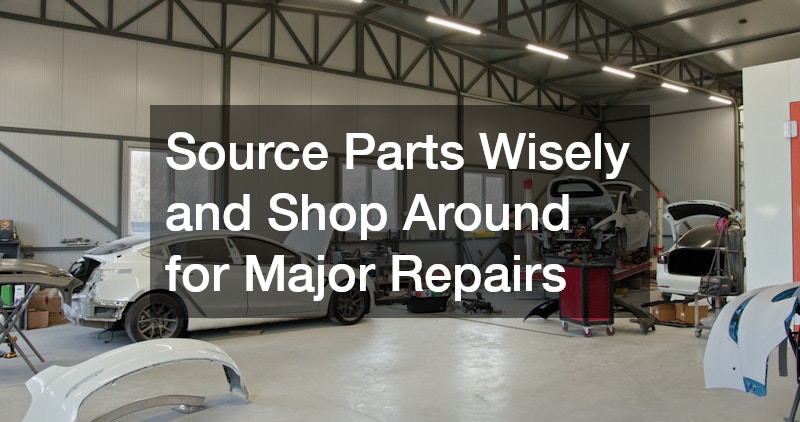
When a major component fails—such as a transmission, an alternator, or a steering rack—the cost of the physical part and the labor to install it can vary wildly from one garage to another. Knowing how to source your own parts and negotiate labor can cut your bill in half.
Compare OEM Versus High-Quality Aftermarket Parts
Not all replacement parts are created equal, and knowing when to spend and when to save is crucial.
| Part Category | Recommendation | Reasoning |
| Critical Sensors (O2, MAF) | OEM Only | Aftermarket electrical sensors frequently fail to communicate correctly with the vehicle’s computer, leading to endless check engine lights and poor fuel economy. |
| Internal Engine Components | OEM Only | Items like timing belts, water pumps, and head gaskets are buried deep in the engine. You do not want to pay 10 hours of labor twice because a cheap aftermarket belt snapped prematurely. |
| Brake Pads and Rotors | Aftermarket (High-Tier) | Premium aftermarket ceramic brake pads often outperform OEM pads in both stopping power and reduced brake dust, usually at a lower price point. |
| Cabin and Engine Air Filters | Aftermarket (Budget) | These are simple paper or cotton elements. A $10 aftermarket filter performs the same job as a $40 dealer-branded filter. |
Many online retailers allow you to purchase the exact same parts the dealership uses, direct from the manufacturer, bypassing the dealership’s 30% to 50% retail markup.
Obtain Multiple Itemized Quotes Before Committing to Big Jobs
Never accept the first estimate for a major repair without a secondary opinion. Shops use standardized software (like Alldata or Mitchell) to determine the “book time” for a repair, but their hourly labor rates and parts markups differ significantly.
Request a fully itemized quote that separates parts from labor, and lists any shop supplies or hazardous waste disposal fees. By comparing different auto repair services line-by-line, you can easily spot if one shop is inflating the hours required or slipping in unnecessary fluid flushes to pad the bill.
Leverage Community Reviews to Find Hidden Gem Garages
Dealerships carry massive overhead costs—glass showrooms, free coffee bars, and large administrative staffs—which are subsidized by their staggering hourly labor rates.
To bypass this, look toward your local community. Dedicated owner forums, local car club groups on social media, and neighborhood apps are excellent resources for finding independent specialists. Opting for independent, local auto repairs often yields much lower hourly labor rates without sacrificing a drop of technical expertise. In many cases, the technicians at independent shops are former dealership master mechanics who opened their own businesses to escape corporate quotas.
Approach Cosmetic Upgrades Strategically

Enhancing the look and comfort of your vehicle is a great way to maintain your pride of ownership, but the aftermarket cosmetic industry is fraught with overpriced services and subpar materials. Strategic timing and quality control are essential.
Choose the Right Time of Year for Upgrades to Catch Seasonal Discounts
The automotive cosmetic industry is highly seasonal. During the spring and early summer, people receive their tax returns and want their cars looking sharp for road trips and car shows. Demand skyrockets, and prices follow suit.
Conversely, the late fall and winter months are notoriously slow for styling shops. This is the perfect time to negotiate. Booking a premium auto tinting service during December or January can often yield discounts of 10% to 20%, or result in free upgrades to better materials, simply because the shop is desperate to keep its bays full and technicians busy during the off-season.
Opt for High-Quality Materials Upfront to Avoid Re-Do Costs Later
When it comes to cosmetic enhancements, the “buy cheap, buy twice” rule is absolute. Choosing budget options almost always costs more in the long run due to premature failure.
For instance, cheap, dyed films used in budget auto window tinting will inevitably succumb to UV radiation. Within a year or two, the dye breaks down, causing the film to turn a hazy purple and form massive, vision-obscuring bubbles. Removing baked-on, bubbled tint is a labor-intensive nightmare. Paying upfront for a high-quality ceramic film not only rejects significantly more heat and UV rays, but it also carries a lifetime warranty against fading and bubbling, saving you the cost of stripping and replacing it later.
Verify Warranty Coverage and Legal Standards Before Modification
Before spending a dime on cosmetic upgrades, thoroughly research your local and state laws.
-
Visibility Laws: Every state has specific Visible Light Transmission (VLT) laws dictating exactly how dark your windows can be. If you install film that is too dark, you risk being pulled over, fined, and forced to pay a shop to scrape the illegal film off your car.
-
Exhaust and Suspension: Lowering a car too aggressively or installing an exhaust that violates local decibel limits can result in similar fines. Furthermore, poor modifications can void specific parts of your manufacturer’s warranty. Always ensure your cosmetic upgrades keep your vehicle fully street-legal to avoid financial penalties.
Tackle Restoration Work in Phases
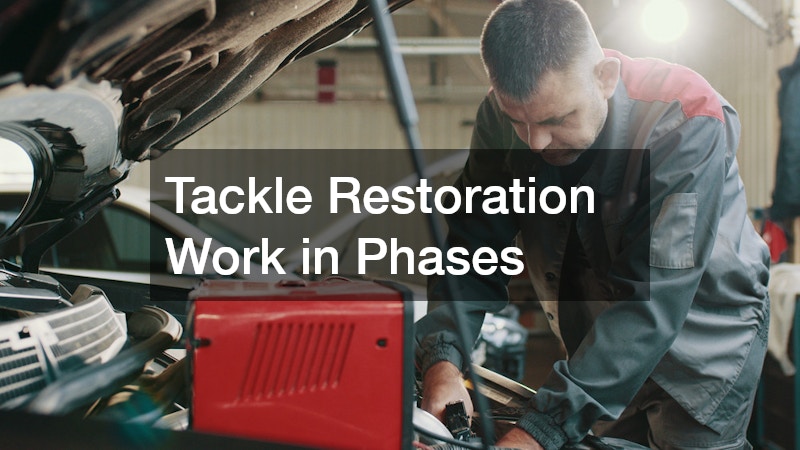
Restoring an older vehicle, or simply cleaning up a high-mileage daily driver, can feel financially overwhelming. Bodywork and paint are notoriously expensive due to the sheer amount of manual labor involved. The secret to keeping costs down is breaking the project into manageable phases and doing the grunt work yourself.
Prep the Surface Yourself to Cut Down on Labor Hours
In any body shop invoice, the actual application of paint accounts for a very small percentage of the total cost. You are primarily paying for the meticulous labor required to prep the vehicle.
If you have a safe workspace, you can save hundreds of dollars by doing the preliminary disassembly and prep work at home. Carefully remove the headlights, taillights, emblems, and plastic trim pieces yourself. If the shop doesn’t have to spend three hours carefully masking off your door handles and trim with painter’s tape, that is three hours of labor wiped off your bill. If you are comfortable, you can even use a DA (dual-action) polisher and fine-grit sandpaper to scuff the clear coat, preparing the surface for the professionals.
Differentiate Between Cosmetic Flaws and Rust Issues that Threaten Structural Integrity
Prioritization is the key to budget restoration. You must identify what is merely ugly and what is actively destroying the vehicle.
Light, superficial surface rust on a quarter panel can usually be treated at home with a wire brush, a rust-converting chemical spray, and some touch-up paint to halt the oxidation process. However, if rust has eaten through the metal or has reached the vehicle’s frame, it compromises the structural integrity and safety of the car in a crash. In these severe cases, manual sanding is useless; you must seek professional automotive sandblasting to completely eradicate the deep-seated corrosion down to bare metal before fresh steel can be welded in. Addressing structural rust immediately prevents the car from becoming completely unsalvageable.
Group Minor Scrapes and Dents into One Comprehensive Fix
Body shops operate on economies of scale. Every time a car is brought into the paint booth, the shop must spend time mixing specific paint codes, cleaning their spray guns, and baking the finish.
If your vehicle has a dent on the fender, a scrape on the bumper, and a scratch on the door, do not fix them in three separate appointments over a few years. Save your money and schedule a single, comprehensive car paint service to address all the panels at once. The technician can mix one large batch of paint and blend the clear coat seamlessly across the side of the vehicle in one session. This drastically reduces the setup and breakdown fees, resulting in a much cheaper overall rate per panel.
Prepare for the Unexpected to Minimize Emergency Costs
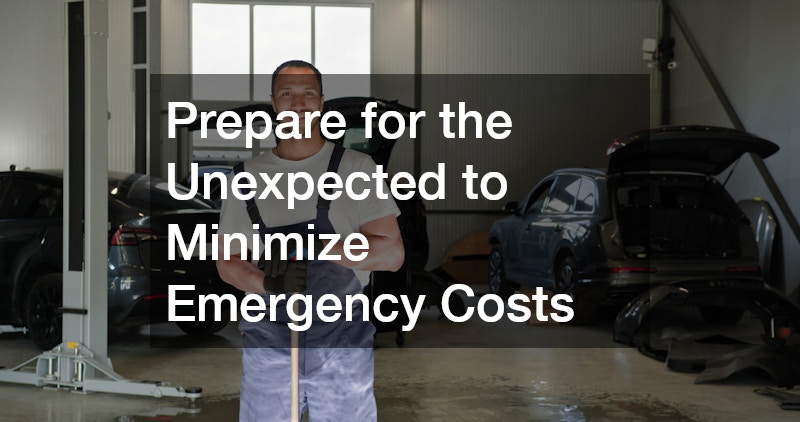
The most exorbitant automotive expenses are rarely planned. They happen on the side of a highway at midnight, or in a freezing parking lot when you are already late for work. When you are stranded, you lose all negotiating power. Preparing for emergencies in advance is the ultimate financial safety net.
Invest in a Portable Power Pack and Basic Emergency Kit
A dead battery is the number one cause of unexpected vehicle strandings. Historically, this meant relying on the kindness of strangers with jumper cables or paying a hefty fee to a roadside service provider just to get the engine turning.
Today, technology has rendered this expense obsolete. For less than $100, you can purchase a compact, lithium-ion portable jump starter. These devices are roughly the size of a paperback book, hold their charge for months in your trunk, and can instantly deliver enough amperage to start a V8 engine. Owning one completely eliminates the need to ever pay predatory fees out-of-pocket for basic car jumpstart services.
Complement this power pack with a basic kit containing:
-
A 12V portable tire inflator.
-
A simple tire plug kit for addressing basic nail punctures.
-
A basic socket set and screwdrivers.
-
Reflective hazard triangles to keep you safe while working on the shoulder.
Audit Your Insurance Policy for Hidden Assistance Coverage
Many drivers are entirely unaware that they already pay for roadside assistance. Before you purchase an expensive standalone auto club membership, read the fine print of your existing financial agreements.
Check your current auto insurance policy; many insurers include towing and labor coverage for just a few extra dollars a month, which is significantly cheaper than a separate subscription. Additionally, check the benefits guide of your major credit cards. Many premium travel or rewards credit cards offer complimentary, dispatch-based roadside assistance as a hidden perk for cardholders.
Keep a Vetted List of Emergency Contacts in Your Glovebox
When a vehicle suffers a catastrophic mechanical failure or is involved in a collision, the immediate aftermath is stressful and chaotic. This vulnerability makes drivers prime targets for “predatory towing.”
Some tow operators monitor police scanners, arrive uninvited at accident scenes, and pressure flustered drivers into letting them hook up the car. They then tow the vehicle to their own private lots and hold it hostage for thousands of dollars in daily storage fees and inflated “gate release” charges.
To protect your finances, do your research on a calm Sunday afternoon. Find well-reviewed, municipal-approved tow truck services in your local area and program their direct dispatch numbers into your phone, keeping a written copy in your glovebox. If you ever break down, you can confidently wave off aggressive, uninvited operators and call a trusted professional who uses transparent, regulated pricing, ensuring your bad day doesn’t turn into financial ruin.